Small machines, built on the bench.
3D printing, electronics and common parts, turned into things that move, light up and draw. Every build, the dead ends included, is in my notebook.
Latest from my notebook
All entries →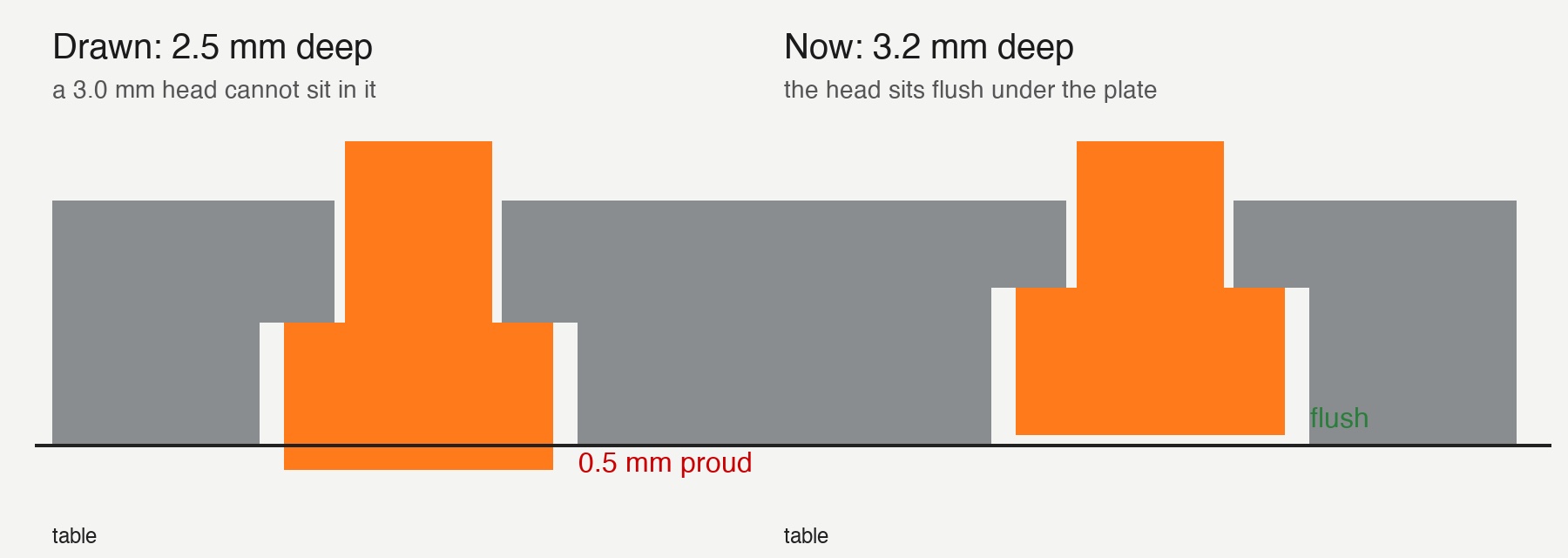
Every screw hole, checked before I print
The grid base for the pod was already printing when I found the counterbores were 0.5 mm too shallow. I had drawn them 2.5 mm deep. The socket-cap heads in my kit are 3.0 mm tall, so every screw under the plate would…
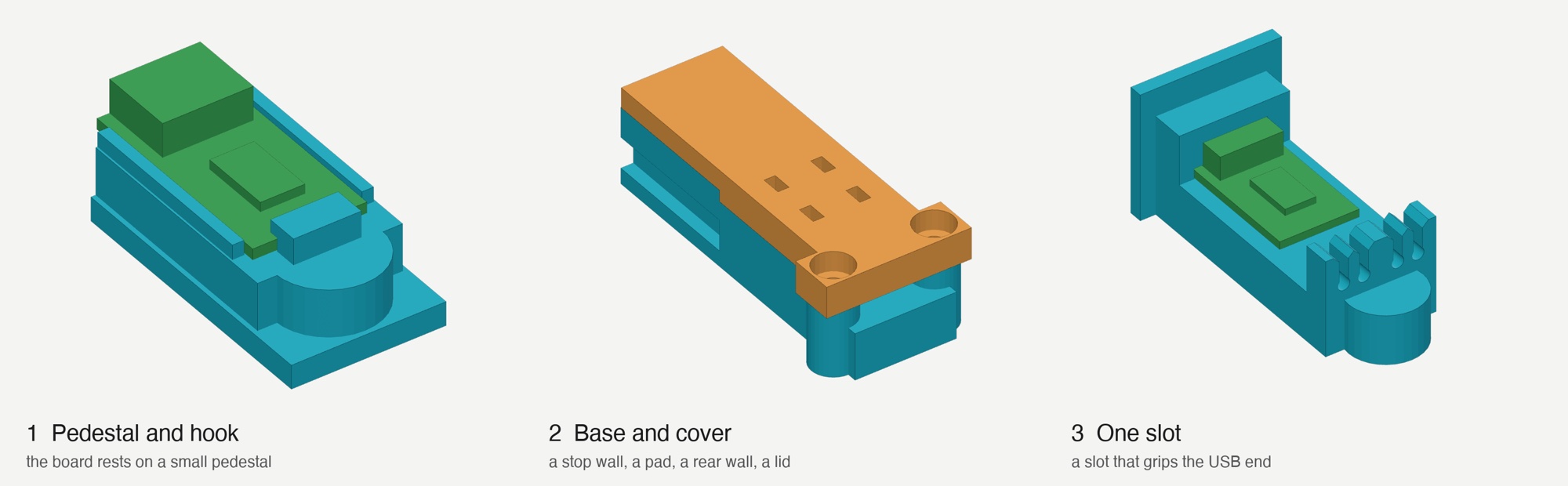
Designing the PD trigger holder three times
The PD trigger board is 23 by 11.8 mm and weighs almost nothing, and the first holder I printed for it still let it move every time I touched the cable. The board sat on a small sled with barely any grip, and a USB-C…
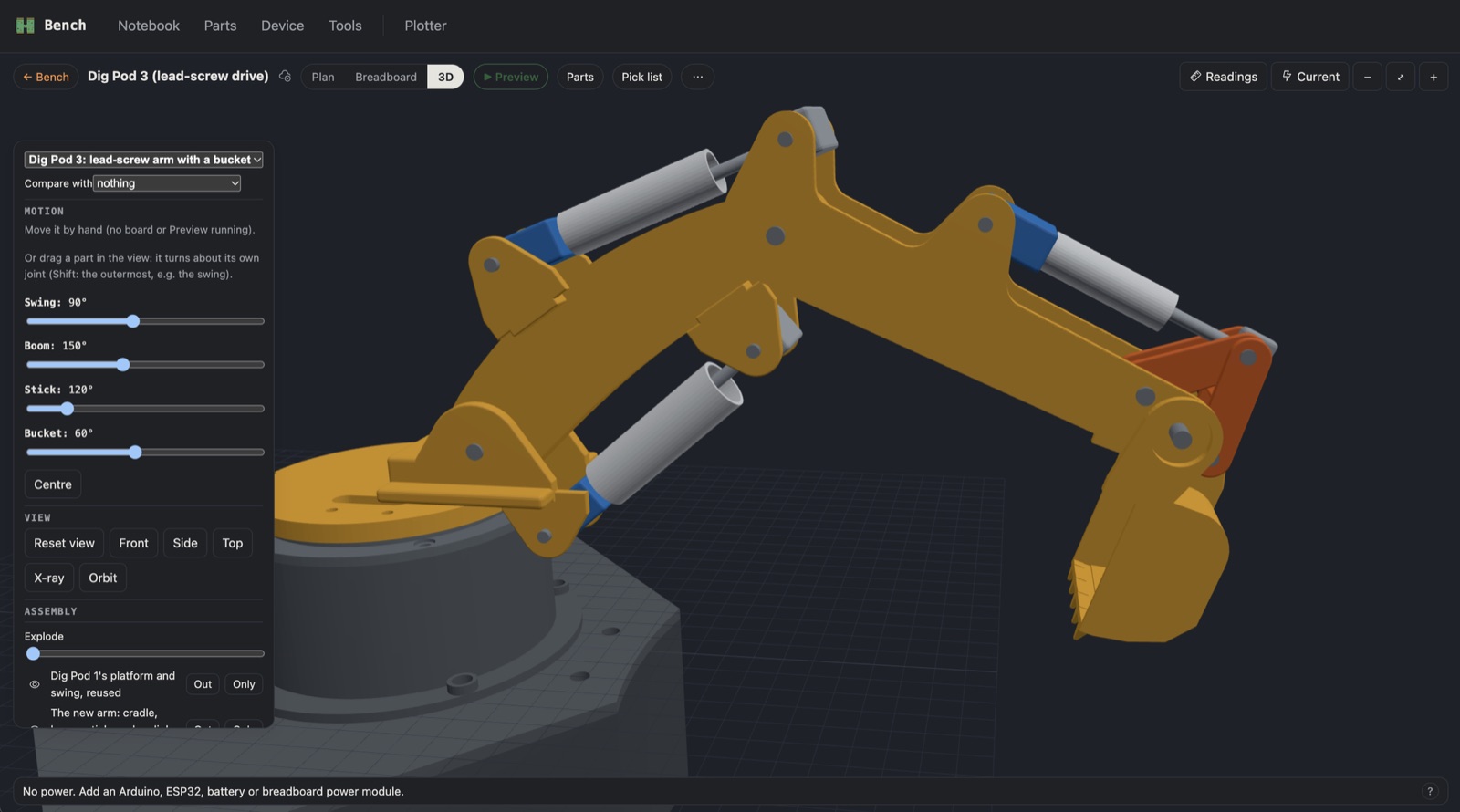
Exploring Dig Pod alternatives
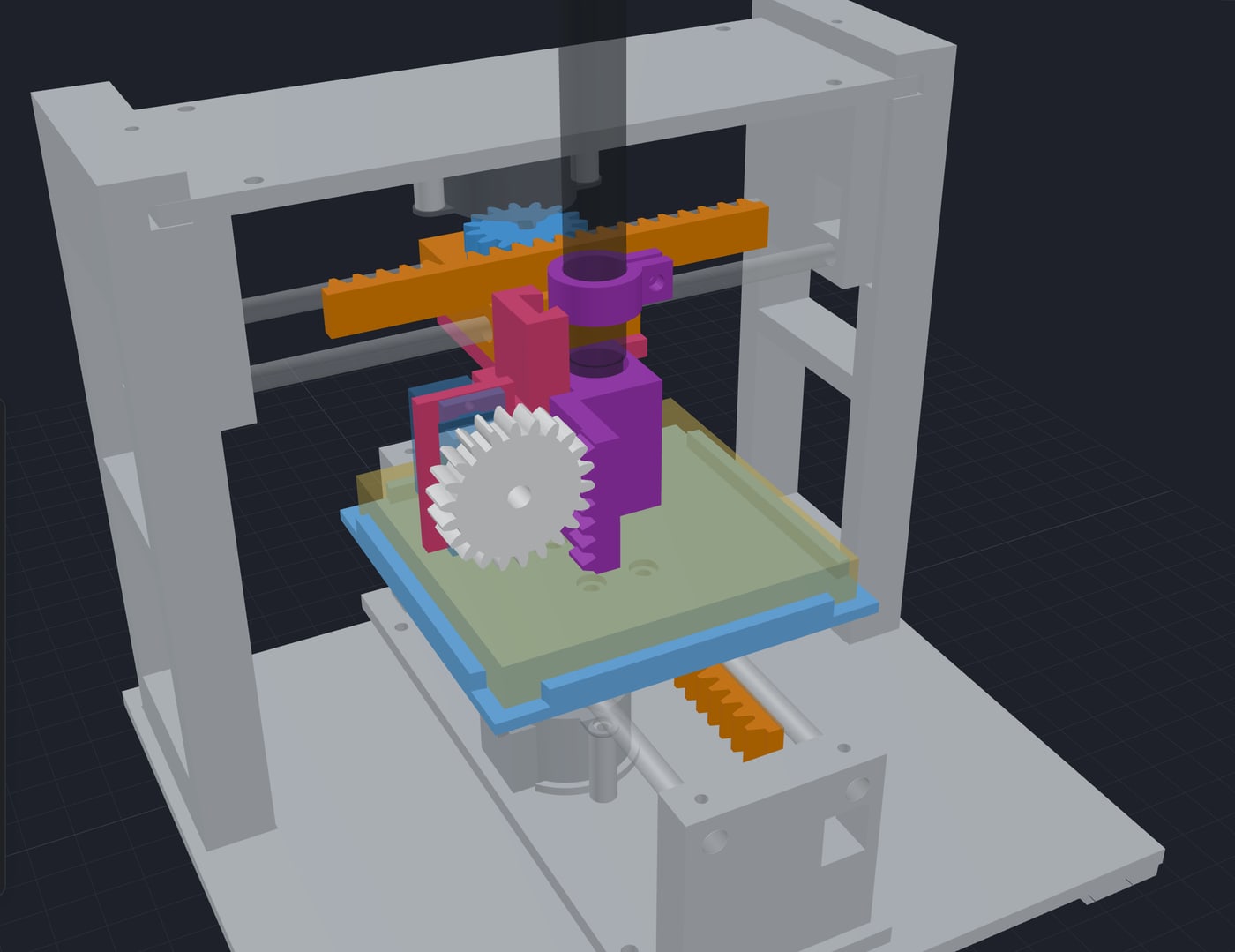
Dig Pod 1 has a servo at every joint, and a servo has to keep drawing current to hold a load. I wondered whether a lead screw could hold the arm instead, so I built that arm in Bench before printing anything. Nothing…
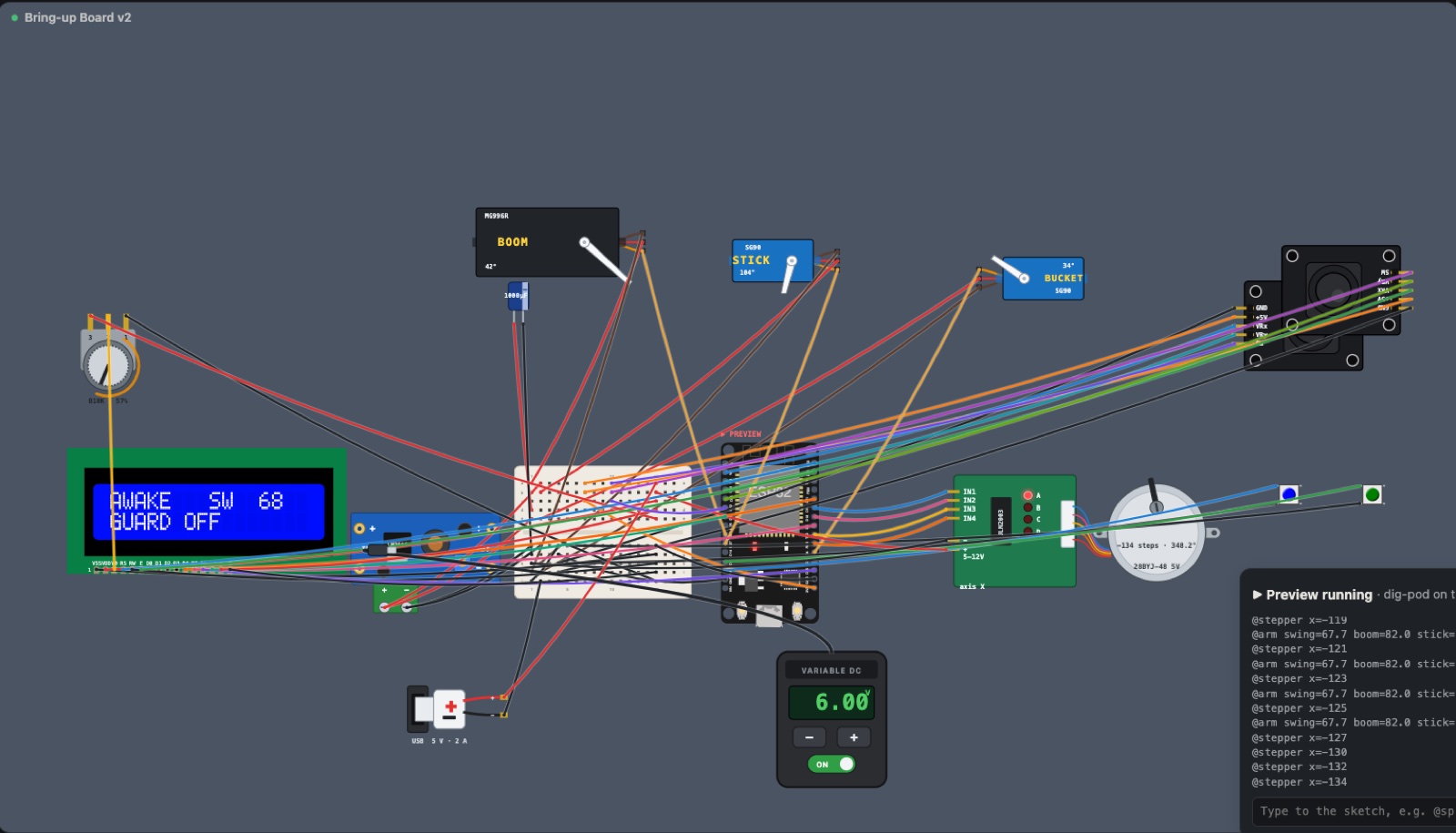
The servos moved, and the arm wouldn't
I pushed the phone panel's stick and the servos in Bench didn't respond. They did move. The pod's firmware was working exactly as designed, for a board I don't have on the bench.
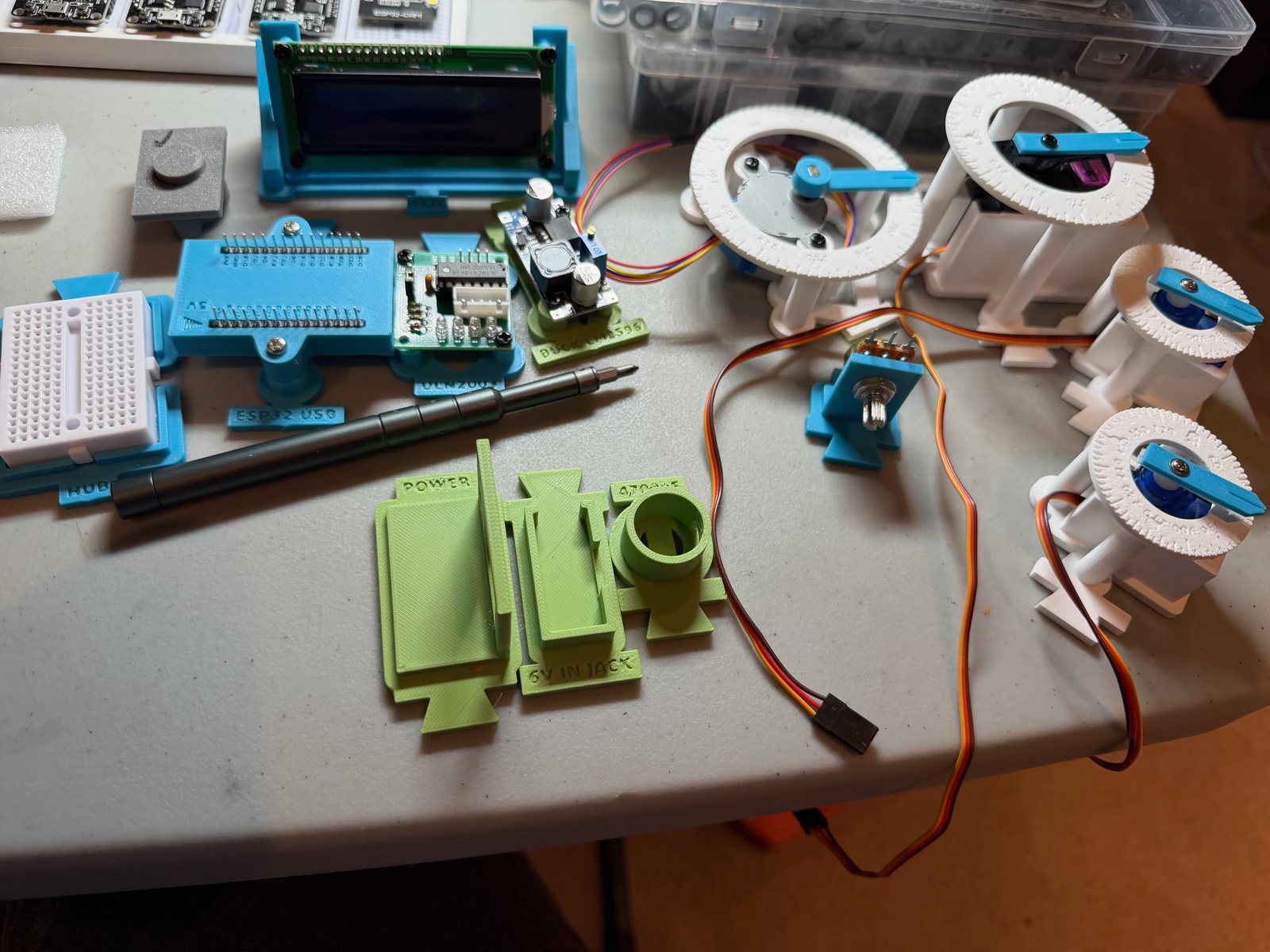
How to waste time and filament on bad ideas
I spent days printing a bring-up board on the Snapmaker, and then the first servo wouldn't go in. The MG996R has a bump where its lead leaves the case, and I'd made a cradle that a servo has to be lowered into from…
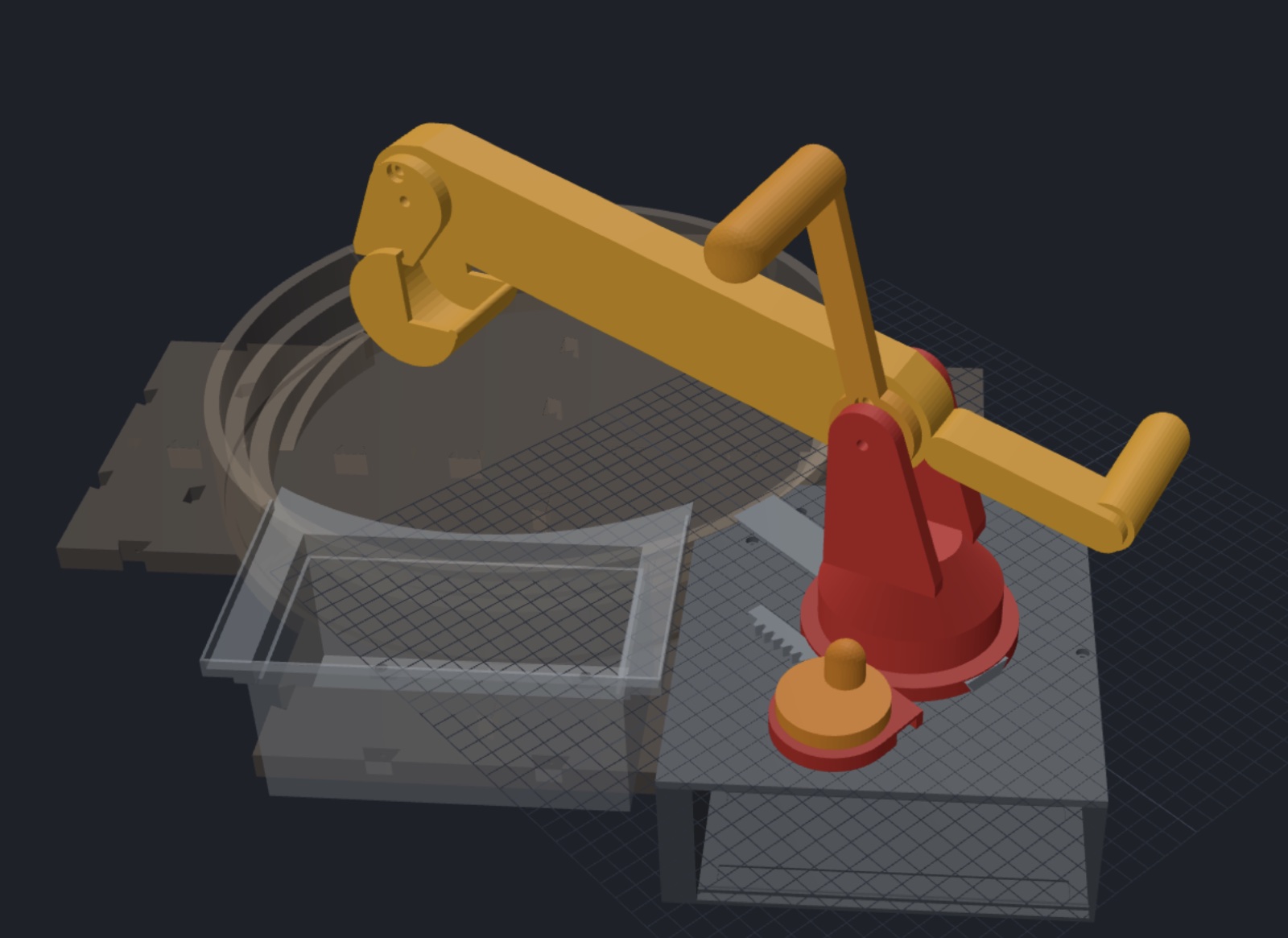
Bean There Dug That, part 6: a digger with no electronics
Dig Pod 1 has servos, a stepper and an ESP32. Dig Pod 2 has none of that. It's a miniature of the sand diggers you see in playgrounds: you pull the levers, and the arm digs. It drops into the same corner of the game…
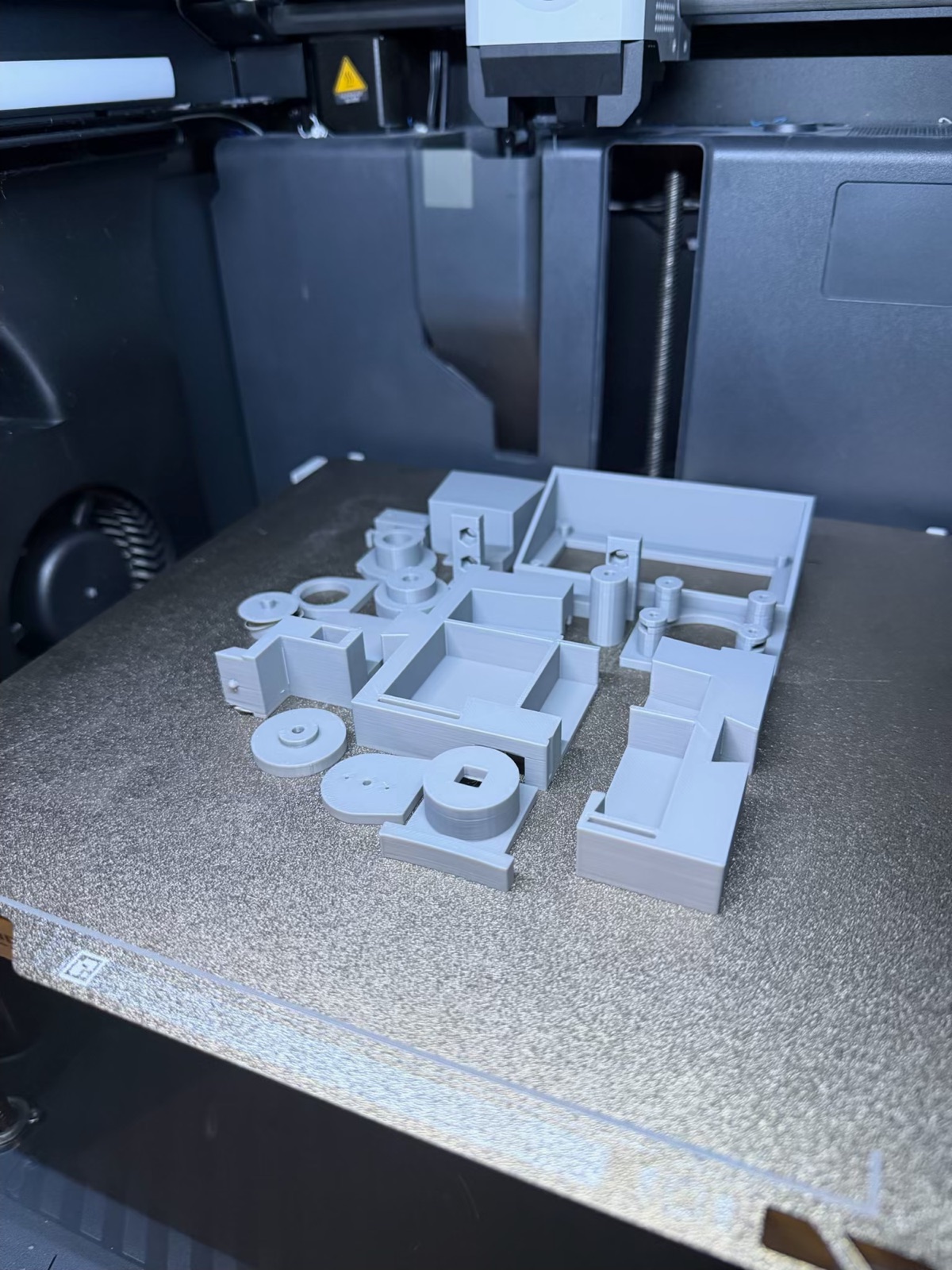
Bean There Dug That, part 5: the first test prints
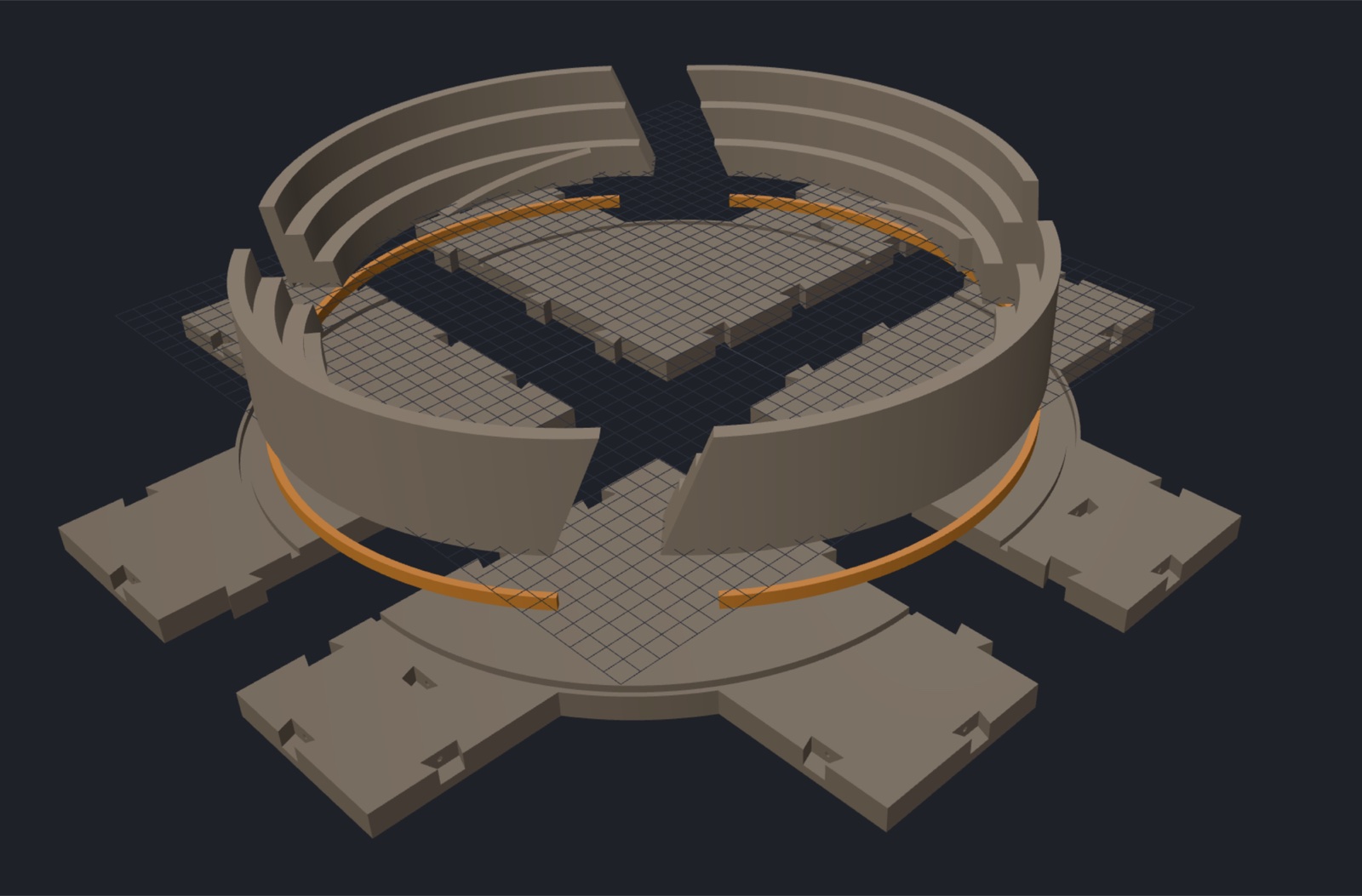
Before printing a whole Dig Pod, I printed the small pieces that carry the guesses: the joints, the screw holes, the press fits. All 18 coupons fit on one plate of the P1S and took under three hours. Most of them fit…
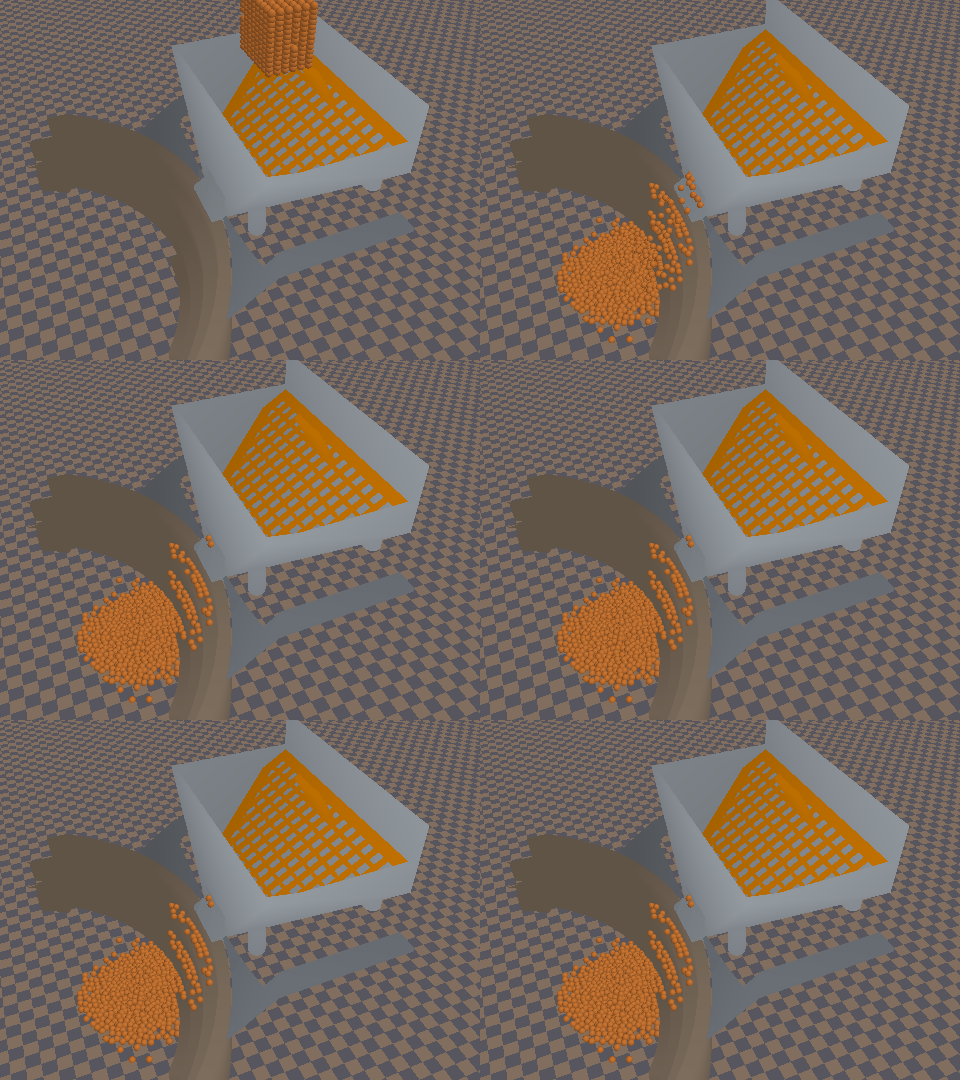
Bean There Dug That, part 4: testing the hopper with physics
The hopper from part 3 looked right, but I wanted to know if it would actually work: do the lentils fall through the grate and slide back into the pit, and do the gems stay? So Bench's model scripts can now run a…
Projects
All machines →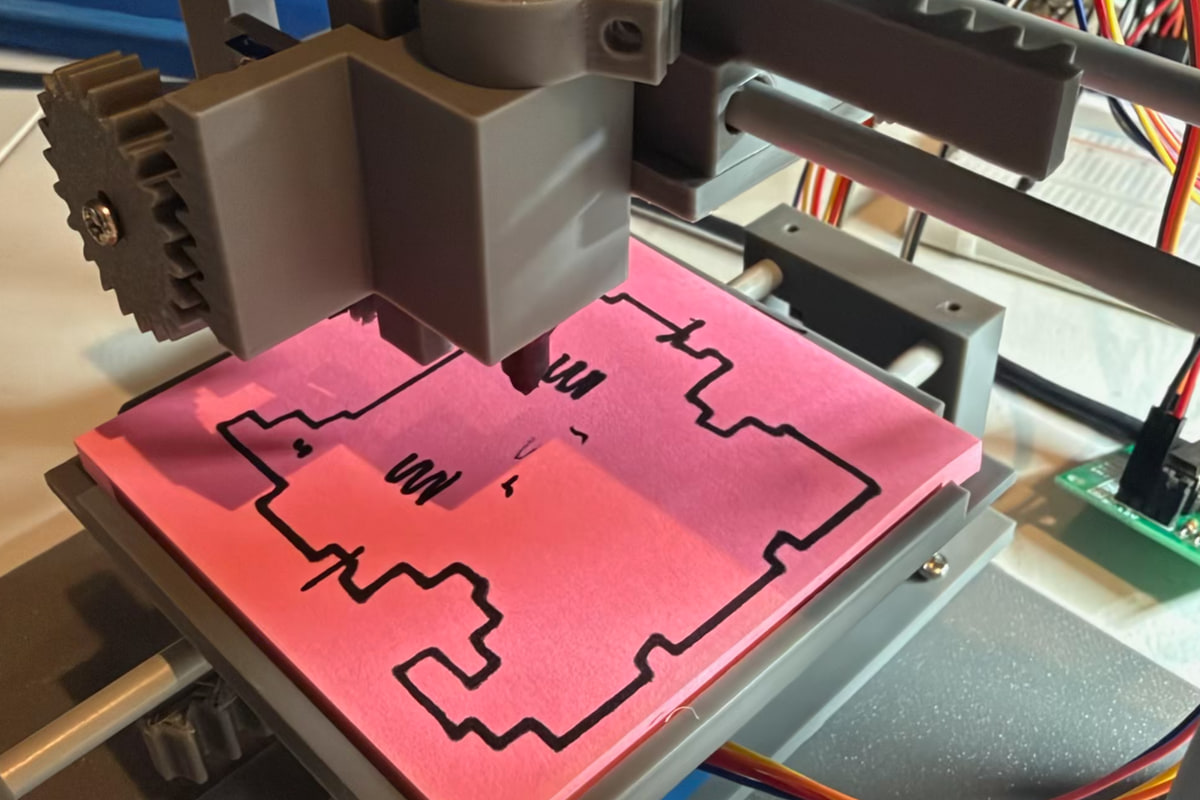
Experiments
Bring-ups and test rigs →
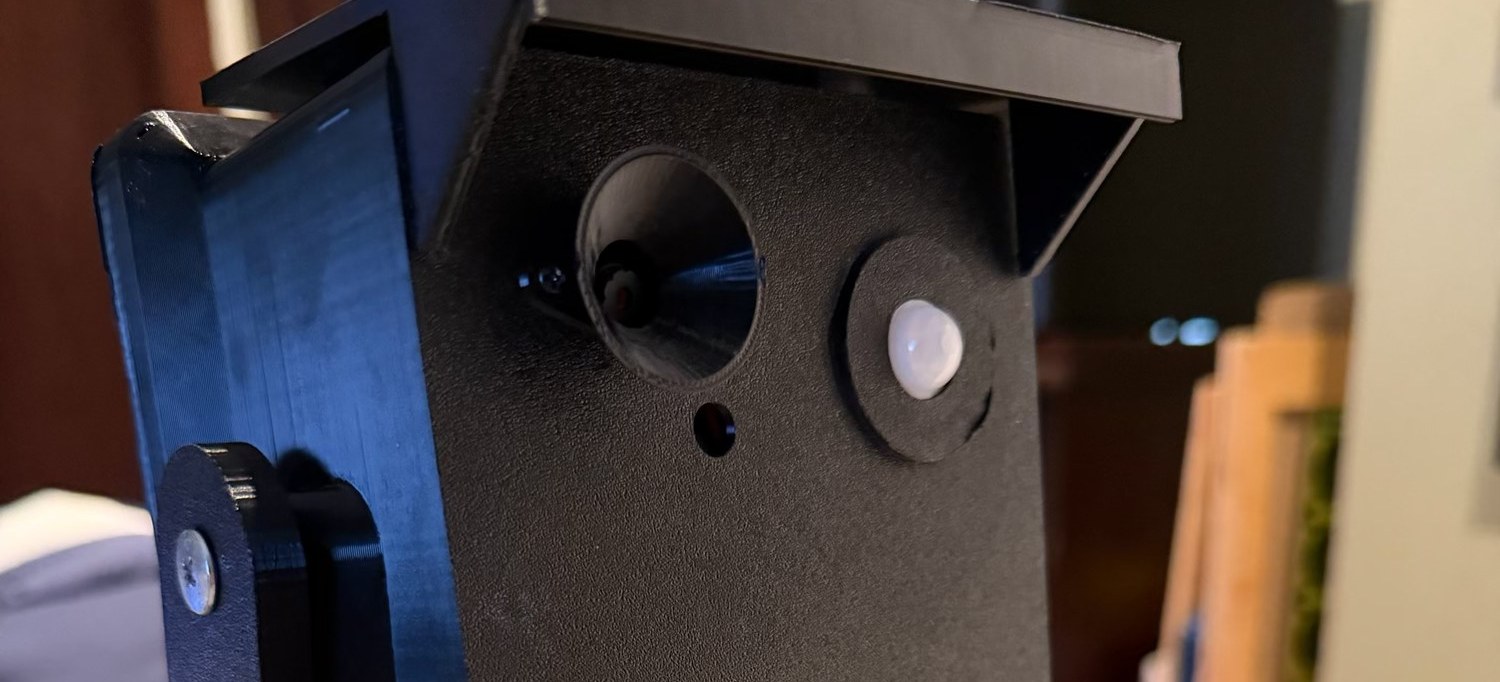
Asteroid Test
WorkingA tiny Spacecavator-style digger on a Nextion screen: steer through rock and collect gems with a joystick, zoom with a knob.
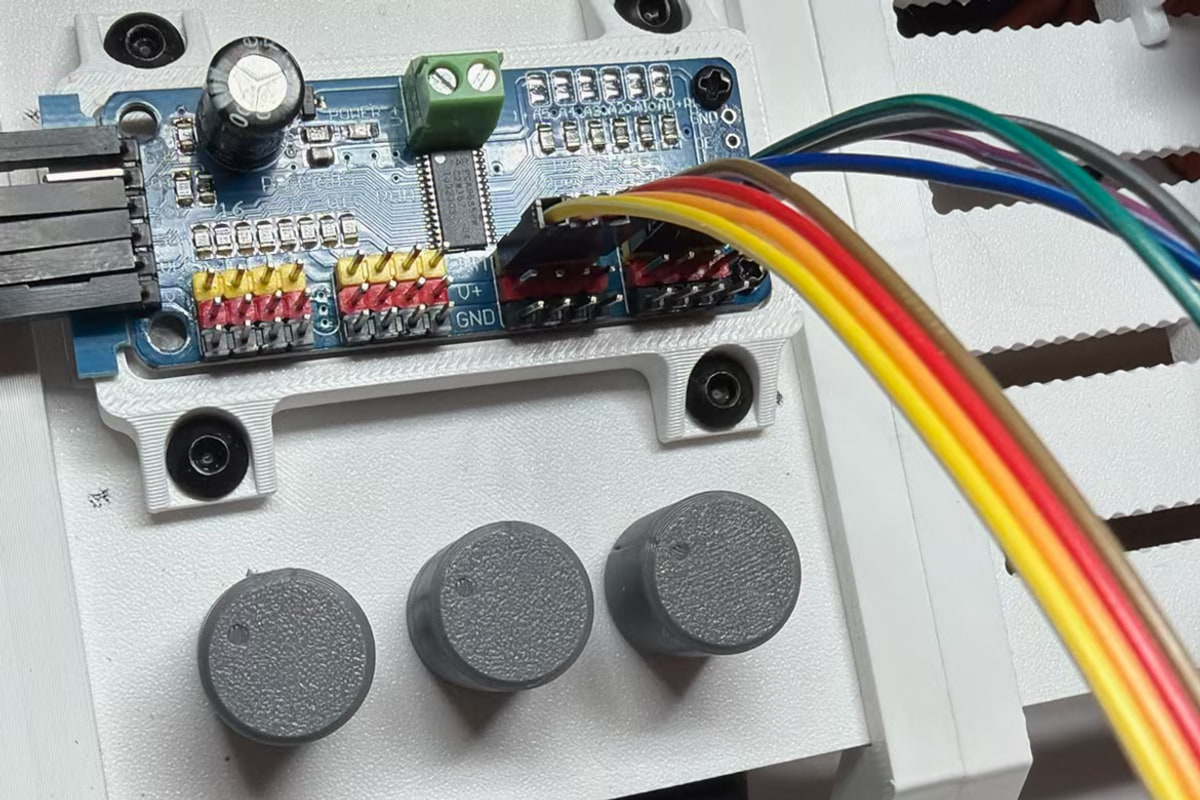
Servo Tester
WorkingFind a hobby servo's real end points and centre: a PCA9685 driver, three knobs and a display, all run by an ESP32.
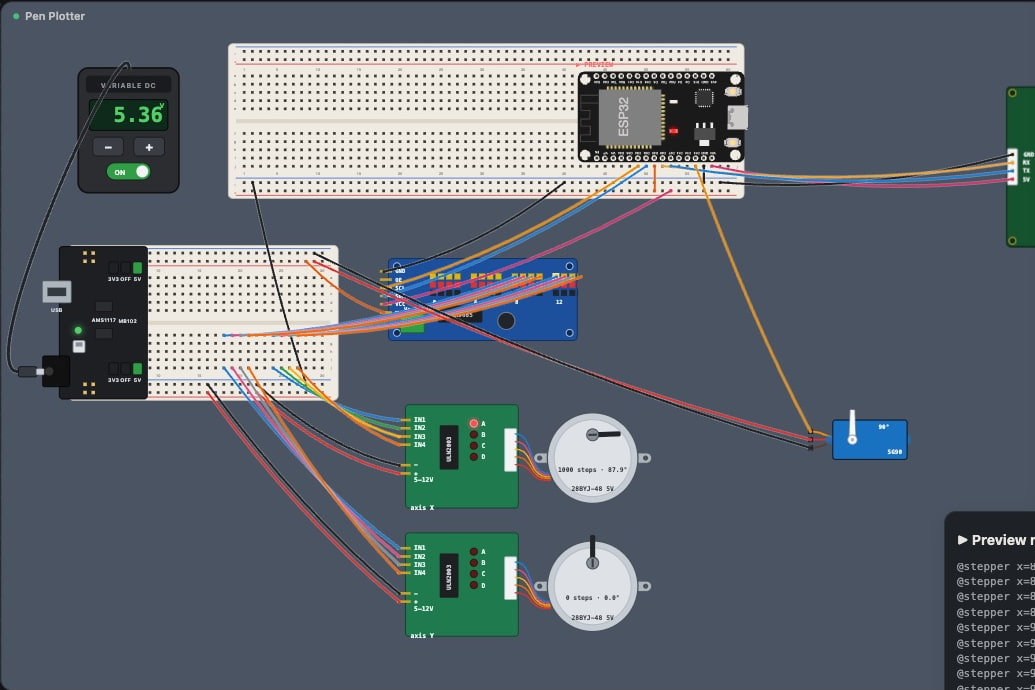
Stepper Test
WorkingA 28BYJ-48 stepper driven through the PCA9685 and a ULN2003: milestone one of the pen plotter.
Bench
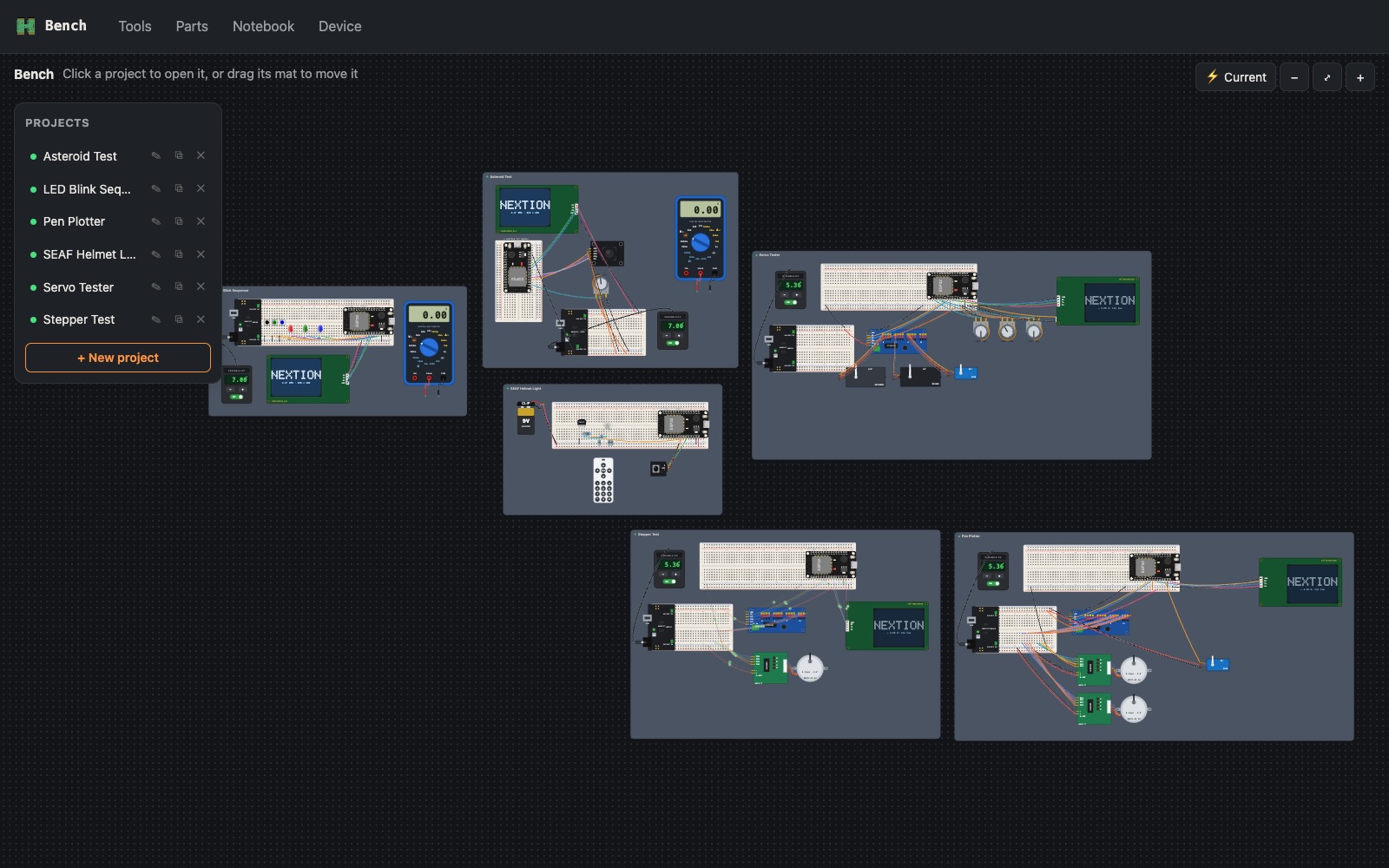
Every machine here starts in Bench, our own workbench app. One project file gives you the breadboard, schematic, perfboard, 3D model and the firmware sketch, with a live circuit solver and one-click flashing to a real ESP32.